By Harikrishna Kundariya
The concept of "Internet of Things (IoT)" is not just a theory anymore, it's very real. IoT is now utilized in home automation devices, health monitoring devices, supply chain/factory monitoring, etc., as well as how we will eventually run our cities. The example of IoT Central demonstrates this evolution.
We have now reached a point in the development process of IoT where the importance of having shared knowledge, practical experience, and thoughtful conversation about IoT has surpassed the need for hype. The great thing about this chapter in the development of IoT is that there is not only an increase in overall scale, but also the value of having a focused intent. It's no longer just about connecting multiple devices, but rather now about utilizing IoT to address real-world issues, eliminate unnecessary waste, enhance safety, enable better decision-making for humans, and create a more responsible, futuristic system.
The lessons learned from the years of deployment, failures, continuous refinement, and interactions we have had with IoT devices will help us move into a more mature, meaningful, trustworthy, and sustainable IoT landscape which places a higher value on providing solutions to address the challenges we face as a society today.
1. IoT Everywhere: A Rapidly Expanding Ecosystem
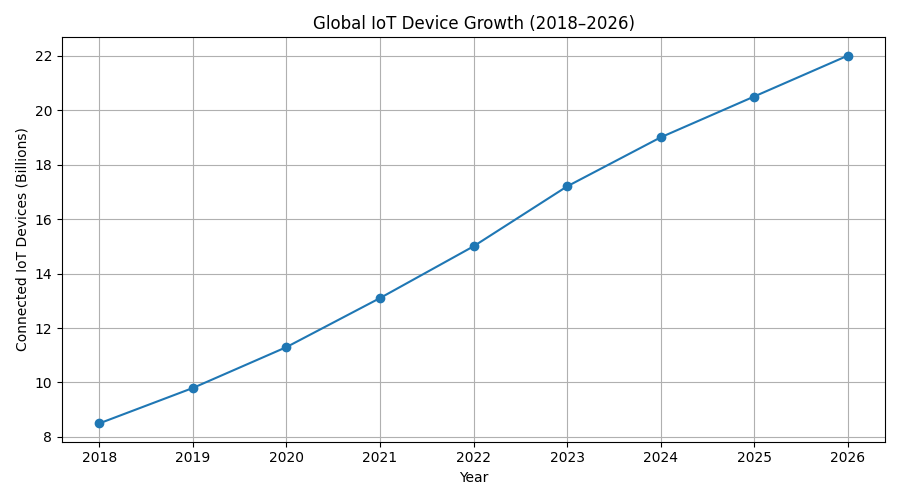
The growth of IoT has reached unprecedented numbers and according to analysts there are now estimates of billions of connected devices globally, in residential households, business settings, and urban municipalities. In addition, the need to add smarter objects to daily life is no longer confined to a few individual items but instead represents an entire category of products that integrate with existing IoT networks.
2. AI-Driven Insights Transform Data Into Meaning
The melding of Artificial Intelligence (AI) with Internet of Things (IoT) devices will be a defining feature of technology development in the coming years (i.e., 2026) and has been a major focus among industry leaders, influencing both consumers and businesses alike, as more than simply collecting data, but now requiring systems to understand and utilize that data.
3. Edge Computing Enables Real-Time Decision Making
According to the recent statistics, market growth of the IoT is estimated to reach more than 75 billion connections by 2025 following mobile edge computing, wide-area connectivity, 5G and real-time information analytics.The concept of "edge computing" allows for intelligent processing directly or indirectly through the connection to the system that supports it. Systems can process information near the device by utilizing local processing capabilities to respond to situations in milliseconds, rather than seconds or minutes.
Take, for example, a machine in a factory that detects an impending failure and successfully stops the machine before the failure can occur, preserving the safety of the worker, or a sensor in a hospital that generates an alarm when a sudden or extreme fluctuation occurs. While these situations may seem far-fetched, they are very commonplace in 2026, and they save not only time and money but lives as well.
4. Connectivity Advances Expand Impact
As connectivity develops with new generations of wireless technologies such as 5G and future generations, it will become the foundation of IoT's potential through improved data rates, network slicing and ultra-low-latency capability. This will provide the basis for critical mission-based uses of IoT to support, such as support for remote surgical procedures and logistics support for autonomous systems.
Connectivity also signals that both people and organizations are moving away from reactive means of interacting with their environments to actively engaging within what will be a collaborative ecosystem, in which informed decisions can be made with confidence.
In addition to speed, the connection between man and machine also reflects man's need for economic prosperity through the development of systems that people can rely on and trust and that are available to them on an ongoing basis and to the maximum extent possible.
5. Energy, Sustainability, and Responsible Deployment
In 2026, energy efficiency and environmental impact will be non-negotiable elements in the design of IoT products and services. With the billions of devices that will be connected to the Internet, using energy-aware design represents a level of technical maturity as well as an ethical responsibility.
Engineers and designers are now deeply focused on making IoT systems sustainable, minimizing power usage while maximizing utility. This trend resonates emotionally because it speaks to collective responsibility, we are building systems that serve human needs without compromising the planet we depend on.
6. Security Moves From Afterthought to Core Strategy
The rising use of connected or smart devices, creates opportunities for bad actors or criminals. It has brought more of a focus on human's Security and is now a top concern for everyone. Families, businesses and cities use secure connected systems as part of their daily lives to maintain stability and security.
By the year 2026, the most established IoT frameworks will have been designed with robust security measures such as secure hardware identities, encrypted communications and anomaly detection systems. Breaching the security of connected devices is the fastest way to destroy people's faith in connected devices, which makes it imperative to create a secure Internet of Things from a technology standpoint before we can expect to have any sort of public confidence in these devices.
When we talk about a comprehensive approach to IoT security, we are fulfilling a much larger purpose for humans than just having IoT devices; it allows us to be sure that the technology used in our homes and communities will enhance and protect our lifestyles, instead of exposing and threatening us.
7. Ethics, Privacy, and Human-Centric Design
One of the most important developments impacting IoT in 2026 is increased awareness of privacy and ethical responsibility. With IoT tracking more and more of your life, you will need to ask how your data will be used, who has access to it, and what rights you have over the digital footprint you've created.
This trend has significant emotional implications regarding autonomy, dignity, and respect. More and more IoT systems demand a clear and transparent governance framework as well as clear consent models and ethical safeguards. They need to reflect our human values as opposed to just utilitarian technology.
8. Interoperability and Ecosystem Collaboration
The IoT ecosystem will be enhanced by the capability for every IoT device to communicate with other IoT devices, enabling users to have greater freedom of choice. The day of closed-system IoT ecosystems and proprietary solutions is gone.
As we enter into 2026, the concept of IoT interoperability will be more than a simple technical protocol; it will now be viewed as a commitment to user empowerment through enabling users to retain their freedoms of choice. This trend not only places people (as opposed to platforms) at the centre of the IoT ecosystem but also enables the IoT experience to thrive by creating an environment where users will continue to find value in being connected to their IoT devices.
Conclusion: IoT Is Personal, Powerful, and Poised for Purpose
Trends that will shape the future of IoT, such as integrating edge intelligence and artificial intelligence (AI), considering ethical aspects, promoting sustainability, and exhibiting a high response rate to user-identified needs. Today's technological development continues to adapt to the human need for safer cities, healthier people, more efficient industries, and increased value systems to improve their quality of life.
These trends matter because they represent the experiences of real people and communities and the impact of these experiences on their quality of life, a positive impact on the ability of technologists to create meaningful change through technology. As development continues into the future, we will see the greatest value of the IoT in the number of people who have been positively affected by the connectedness of devices to technology. -
